


A caravan of 52 citizens of the Eastern Shawnee Tribe of Oklahoma arrived in Ohio earlier this month, traveling by bus and car nearly 700 miles from their tribal headquarters in Wyandotte, Oklahoma.
For nearly 20 years, members of the tribe have been making occasional trips to Ohio and other states, to reconnect with where their ancestors lived before their forced removal.
Last week was one of those trips, and WYSO was invited to join for part of the journey.
On a sunny 80-degree morning just 20 miles east from Dayton, a red coach bus pulls into the driveway at Great Council State Park — the first stop for their first full day in Ohio.
It’s 9 a.m., and the tribe is on a tight schedule. Eastern Shawnee citizens excitedly file off the bus.
“Welcome back!” Great Council tour guide Steve Cuff says to the group.
“It’s good to be back!” said Eastern Shawnee Chief Glenna Wallace.
She initiated these trips shortly after she was elected in 2006.
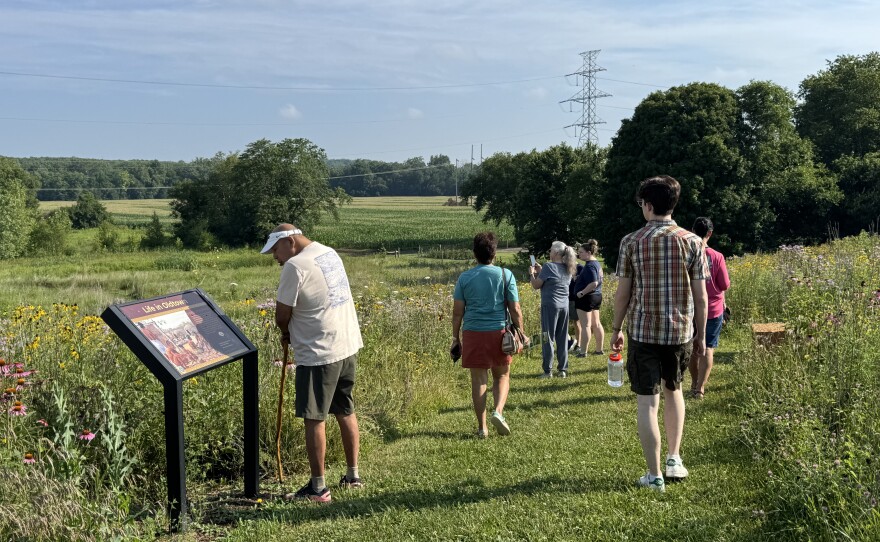
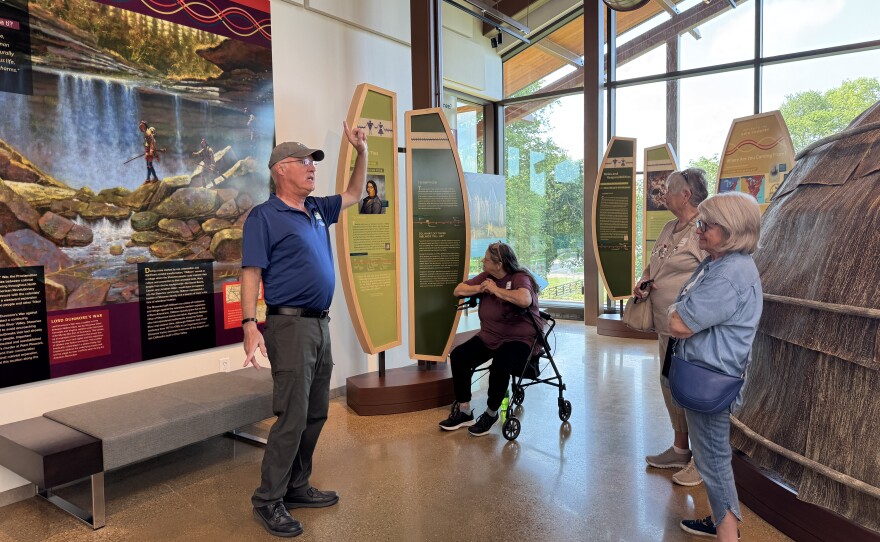
When she thinks of her homelands, Wallace said she thinks of Ohio and the Ohio River Valley.
“So while we can document having been in 27 different states, it was here in Ohio when we were forcibly removed in 1832,” she said.
Reconnection is emotional for many
Great Council’s location was originally called Old Chillicothe, one of the largest known 18th century Shawnee villages in the state.
Amber Graham said she is a descendant of Chief Blackfish, one of the Shawnee leaders of the Chillicothe band. It was her first time visiting the area.
“I like to see where they walked, what they did, and it feels like you can feel a little bit of their presence and what they've been through and it can get a little emotional,” Graham said.
Graham and her sister Ashley Aviles were looking forward to seeing Serpent Mound. It’s a 1,300-foot-long earthen mound shaped like a serpent. The National Historic Landmark was built by Native Americans more than 2,000 years ago. The sisters had only seen it in photos.
Aviles said she had been to Ohio once before with her grandmother some 20 years ago.
“I loved going with my grandma, but I didn't get to appreciate at that age what I'm actually experiencing, how to tie it back to our ancestors,” Aviles said.
Many others on the trip came with their loved ones. Brandy Storey came with her daughter, Brooklynn Sorrell. They’re also first-time visitors to Ohio.
“We're most interested in seeing the homelands of our people before the removal,” Storey said, through tears.
“It's really emotional because when our people were removed from here, by the time they made it to Oklahoma there were only 67 of us left and we lost our ceremonies and a lot of other traditions in the transition," she said. "And we got to Oklahoma and we didn't really have anything.”
Graham said she was full of gratitude.
“I'm very appreciative of our tribe putting something on like this and then making it available to tribal members,” Graham said. “I mean, there's not a lot of tribes out there that do that.”
Decades of effort to re-establish presence
Wallace said the trip is free to its tribal citizens, and there’s a waiting list of people hoping to come.
The tribe also took trips in 2007, 2009, 2014 and 2024. It’s the first time Pennsylvania was on their itinerary. They also made stops in Indiana, West Virginia, Michigan and Illinois.

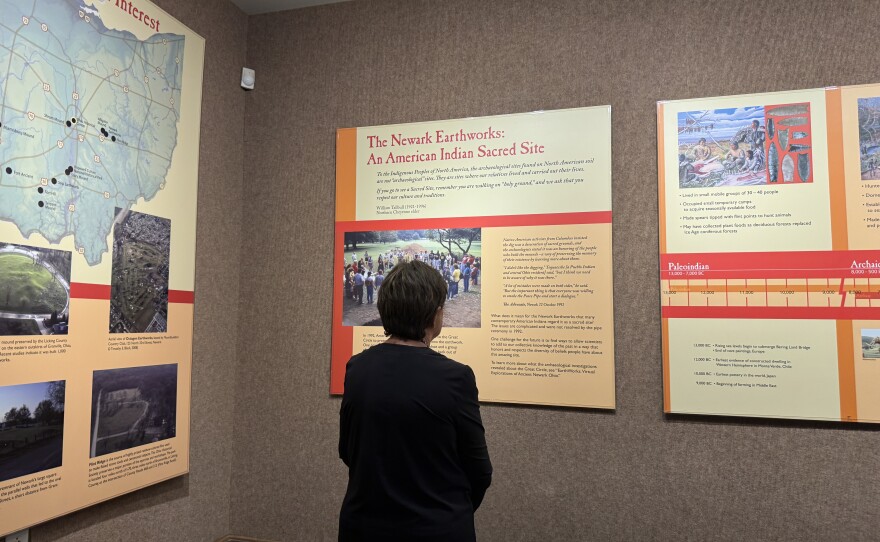
Wallace sees the trips as an opportunity to unite tribal citizens, since only 35% of tribal citizens live in Oklahoma. On this particular trip, Wallace said citizens from eight different states came.
“So that pleases me as well. And it tells me that we're not as successful as we should be in telling our history and getting all of our tribal members. But they remember it when they go on trips like this,” she said.
“The past is the past. Let's build upon it and let's be more positive, and we hope to be able to return and have a presence here."
Through Wallace’s leadership, the Eastern Shawnee Tribe fostered strong relationships with Ohio state agencies like the Department of Natural Resources and with nonprofits to re-establish her tribe’s presence in Ohio.
Her efforts paid off. Videos of Wallace play at prominent museums and educational centers in Ohio as she talks about Shawnee history and the culture today. The Eastern Shawnee Tribe even had a hand in designing Great Council State Park with the two other federally-recognized Shawnee tribes.
But when the United States formed 250 years ago — before Ohio was officially a state — Wallace said they “didn't get the respect then that we are getting now.”
Marvels of ancestral genius fully restored
Another stop on the tour was the Hopewell Ceremonial Earthworks, a UNESCO World Heritage Site. They’re recognized for their geometric designs and alignments with solar and lunar cycles, indicating advanced engineering and astronomical knowledge.
Shawnee people are some of the likely descendants of the builders of the earthen mounds, which were used as ceremonial centers.
One of those sites called the Octagon Earthworks had been leased to a country club, and until last year was a golf course.
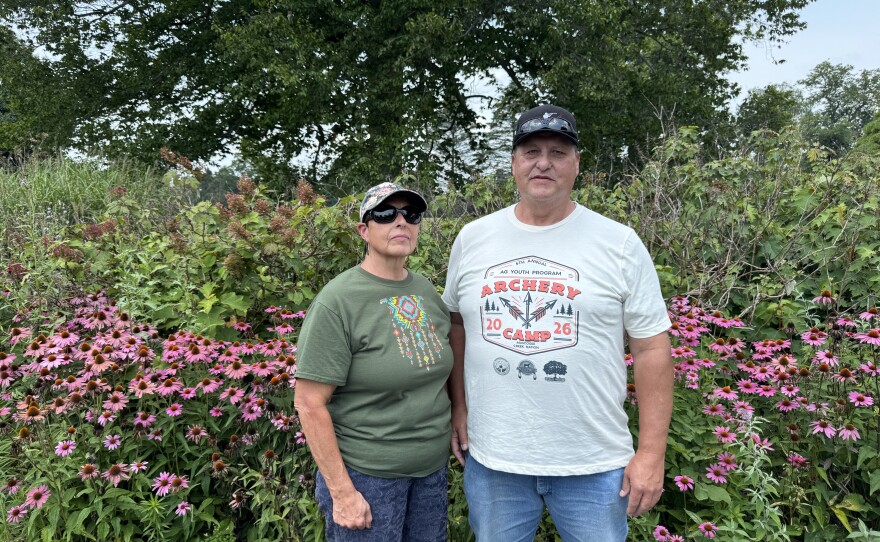
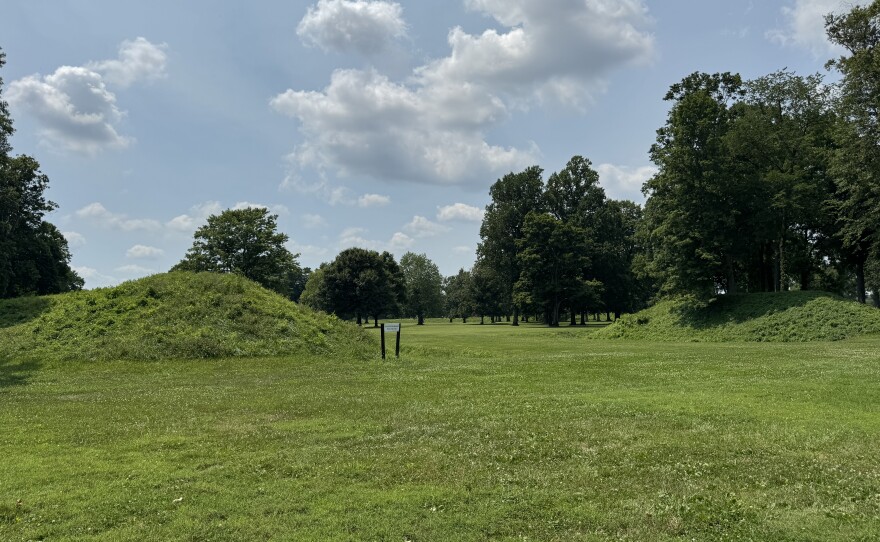
“It's the first time that they haven't been playing golf out here while I was here,” Clint Kissee said.
Kissee said it was discouraging to see the land used that way.
But this day, he felt differently.
“Excited today, I went and left a little tobacco and said a prayer, and it's a beautiful place. Starting to see some native plants come back, medicinal plants and forage plants. So it's been a good day,” Kissee said.
It’s that type of feeling Wallace wants Eastern Shawnee citizens to have. Despite being forced off the land long ago, she says the love for Ohio remains.
“The past is the past. Let's build upon it and let's be more positive, and we hope to be able to return and have a presence here,” Wallace said.
Wallace plans to retire as chief this fall. She hopes the tribe’s trips to their homelands will continue.
